For autistic young adults, the transition to adulthood is about much more than graduating from high school. It's a season filled with new expectations, greater independence, and important life decisions - but often with fewer formal supports than ever before.
Recent research continues to show that this period can be one of the most challenging stages of life for autistic individuals. As educational services come to an end, many young adults are still developing the executive functioning, adaptive living, social communication, and self-advocacy skills needed to navigate adulthood successfully. At the same time, families frequently report difficulty finding transition programs that provide individualized, evidence-informed support rather than a one-size-fits-all approach.
At Lumen, we've always believed that independence isn't achieved by simply reducing support. It's achieved by providing the right support at the right time. That's the philosophy behind our Pathways Program - a specialized track designed for young adults who benefit from a slower pace, individualized coaching, and clinically informed programming while continuing to build skills in real-world environments.
Independence Looks Different for Everyone
Autism is a spectrum, and no two young adults learn in exactly the same way.
Some individuals quickly develop new routines after seeing them modeled once. Others benefit from additional processing time, repeated practice, or individualized coaching before a skill becomes consistent. Neither approach is "better" - they simply reflect different learning profiles.
This understanding is increasingly reflected in current autism research. A 2025 systematic review examining transition programs for autistic students found that successful outcomes are closely tied to individualized planning, supportive relationships, and programs that recognize each person's unique strengths and support needs rather than relying on standardized expectations.
For many young adults, meaningful progress doesn't happen by moving faster. It happens by having the time, structure, and support needed to truly master a skill before moving on to the next challenge.
Building Skills Where Life Happens
One of the greatest challenges during adulthood isn't simply learning a new skill - it's being able to use that skill consistently in everyday life.
A young adult may know how to prepare a meal during a structured lesson but struggle to repeat the same task independently at home. They may understand how to communicate during coaching but find it much more difficult to advocate for themselves during a doctor's appointment or at work.
That's why Lumen's coaching philosophy centers on real-world learning.
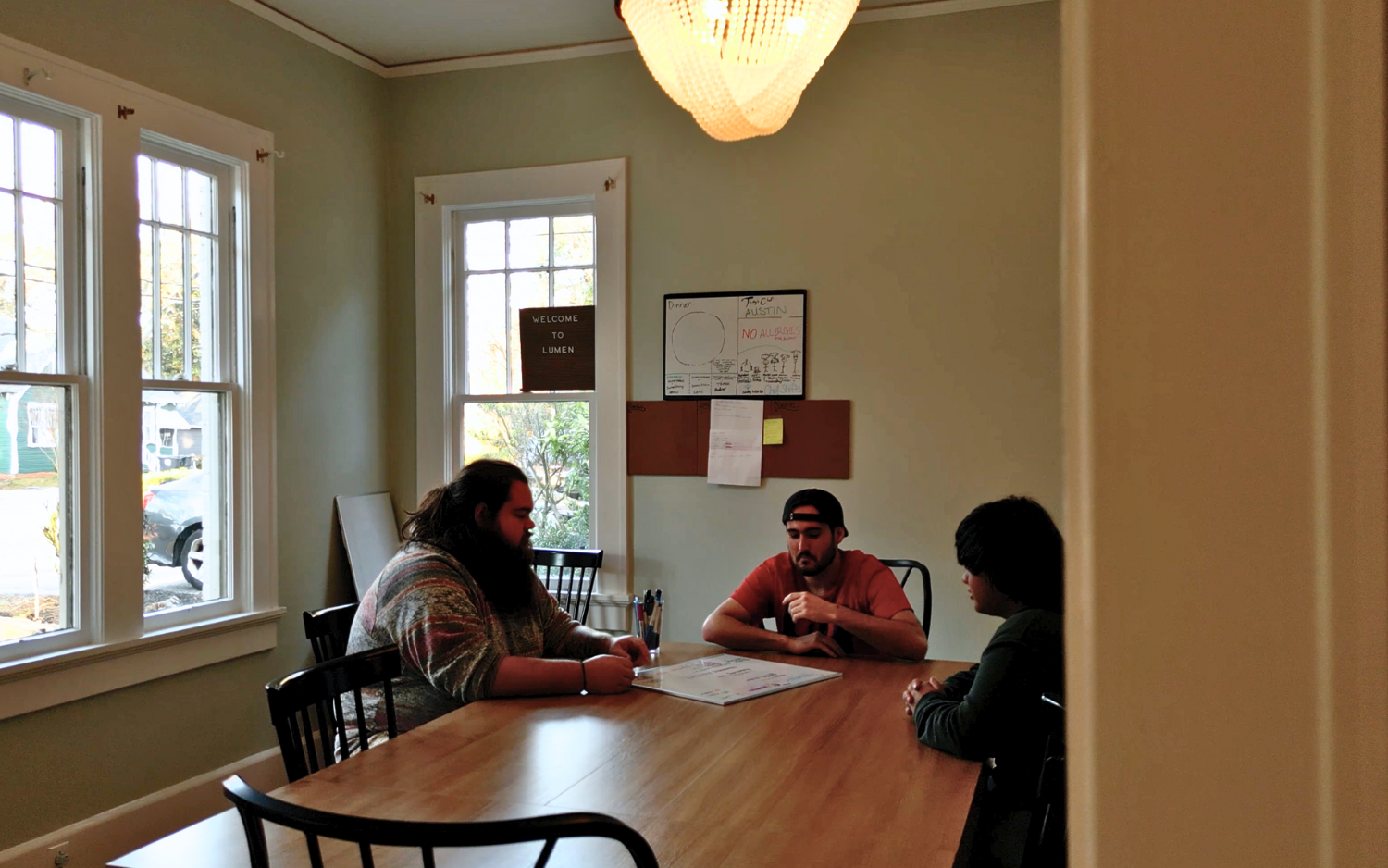
Instead of separating skill development from daily life, students practice skills where they'll actually use them - at the grocery store, in the kitchen, at work, in restaurants, during volunteer opportunities, and throughout the community. Learning happens through experience, guided practice, and consistent coaching until those skills become more natural and transferable.
Why Executive Functioning Matters
Many of the challenges autistic young adults experience during adulthood aren't related to intelligence or motivation. More often, they're connected to executive functioning - the cognitive processes responsible for planning, organizing, initiating tasks, managing time, regulating emotions, and adapting when plans change.
These skills influence nearly every aspect of independent living, from maintaining a daily routine to managing employment responsibilities and navigating relationships.
Emerging research continues to reinforce this connection. A 2024 study examining autistic young adults found that executive functioning was strongly associated with independent living skills, highlighting the importance of interventions that intentionally support planning, organization, and everyday problem-solving as individuals prepare for adulthood.
Rather than expecting these abilities to develop on their own, effective transition programs intentionally teach, reinforce, and practice them over time.
A Higher Level of Individualized Support
The Pathways Program was created for young adults who benefit from more individualized support while continuing to experience all the opportunities that community-based learning provides.
For some students, that means additional one-on-one coaching. For others, it means a slower pace of instruction, greater consistency, or more opportunities to practice new skills before moving forward.
The goal isn't to complete a checklist.
The goal is to build confidence through meaningful success.
Every student progresses differently, and Pathways is intentionally designed to honor that individual pace while continuing to work toward greater independence, stronger self-advocacy, and a meaningful adult life.
Clinically Informed Support
One of the defining features of the Pathways Program is its integration of clinical expertise with everyday coaching.
Clinical oversight and therapeutic support are provided by Dr. Tyler Whitney, PsyD, in collaboration with Jeremy Noles, MSW, Lumen's Director of Clinical Services.
Each student's experience begins with a comprehensive assessment and individualized treatment planning. From there, programming is continually refined through ongoing case conceptualization, clinical collaboration, and coordinated support between Lumen's coaching and clinical teams.
This integrated approach ensures that therapeutic goals don't exist in isolation. Instead, they are reinforced through daily coaching, community experiences, executive functioning support, adaptive living instruction, and meaningful relationship-building. Every strategy is designed to work together so students receive consistent support across every aspect of their experience.
Rather than separating therapy from life skills, Pathways brings them together - creating a more cohesive and personalized approach that supports long-term growth.
Meeting Students Where They Are
At Lumen, we don't believe independence has a universal timeline.
Some young adults need more repetition before a skill becomes second nature. Others benefit from additional coaching as they navigate unfamiliar environments or learn to manage the responsibilities that come with adulthood.
Providing individualized support isn't about lowering expectations - eit's about creating the conditions that allow each student to reach their potential.
The Pathways Program reflects that philosophy by combining evidence-informed practices, individualized coaching, and clinical collaboration in a community where students can continue building confidence, developing practical life skills, and discovering what's possible for their future.
Because lasting independence isn't built by asking someone to do more before they're ready.
It's built by giving them the support they need until they're ready to do more on their own.
References
White, L. M., Adams, D., Simpson, K., & Malone, S. A. (2025). Transitioning on from Secondary School for Autistic Students: A Systematic Review. Autism in Adulthood.
Sullivan, A. C., Vas, A. K., & Johnson, W. L. (2024). Transition to Adulthood: Executive Functions and Independent Living Skills in Autistic Young Adults. Occupational Therapy in Health Care.